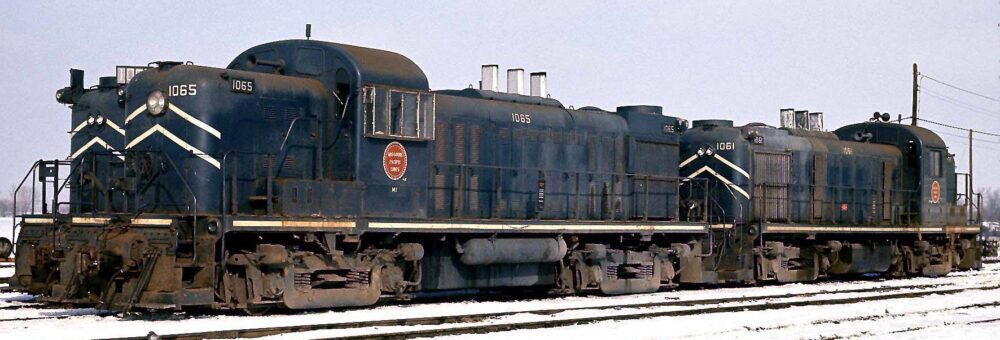
Prototype…
Mosher sits on the western fringe of Ste. Genevieve and serves as the region’s hub for lime production. It was never a town in the traditional sense—no depot, no other businesses—just a station designation born of industrial necessity.
This corner of southeastern Missouri rests on deep layers of sedimentary rock laid down by ancient seas. Over millions of years, silt accumulated and compressed into the limestone that defines the area today. Quarrying and processing that limestone naturally became a major industry.
Historically, three separate companies operated plants and quarries at Mosher: Ste. Genevieve Lime & Quarry, Peerless White Lime, and Bluff City Lime. All produced hydrated lime and quicklime, and all were eventually consolidated into the Mississippi Lime Company. Their early vertical kilns were gradually phased out and replaced with more efficient rotary kilns.
The Mississippi Lime plant remains the dominant shipper on the M-I today, with 33 tracks woven through the facility. A 1970s Vintage Aerial photo captures just how vast the operation had become.
Peerless and its sister plants ran three shifts around the clock, demanding frequent switching to keep kilns burning and product moving. Typical service was twice daily, with even heavier traffic during peak production. Lime was originally bagged and shipped in boxcars to guard against moisture. By 1942, covered hoppers began handling most bulk shipments, though boxcars still appear for customers who prefer packaged product.

Layout adaptation…
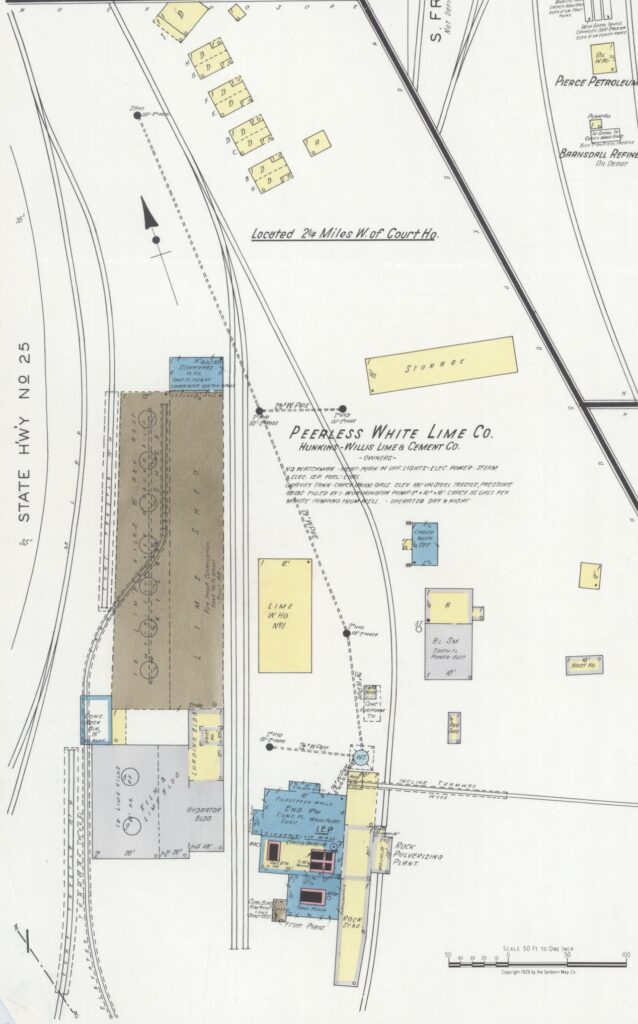
A facility of this magnitude has to be dramatically compressed to fit a model railroad. For the Ste. Genevieve Subdivision, the Peerless White Lime plant—with its classic vertical kilns—provides the right balance of character and operational interest. A historic Sanborn map supplied the core elements: four spurs and a siding to enable run-around moves.

Switching is handled by a dedicated local known as the Mosher Switcher. Tracks 3 and 4 typically hold strings of empties waiting to be loaded. Most outbound lime moves in covered hoppers, filled inside the lime shed. Crushed or pulverized agricultural limestone (Ag Lime) loads into gondolas spotted under the conveyor chute on track 3 only.

When switching the plant, operators will “load” the empties employing a system designed by local electronics expert. Once 8 cars have been loaded, the crew will re-spot empties for the next switcher.

Additional empty cars on may be stored on the siding to assure the plant has an ample supply. Because much of this siding is hidden inside the plant, flagmen must be posted at both ends to protect the cars. So far, the M-I’s safety record remains flawless, with no injuries reported.
Most of the covered hoppers are owned by the M-I, but foreign-road cars appear when demand surges. All outbound lime loads must be weighed at Middle Yard.
Peerless still ships bagged lime from warehouse door 3, loading boxcars on track 1 when packaging is requested. The plant also receives inbound materials such as paper bag stock, lubricants, machinery, and general building supplies, all of which must be spotted at the correct warehouse doors.
Coal for firing the lime kilns arrives in hoppers from Pinckneyville, Illinois, and is spotted on track 2.
