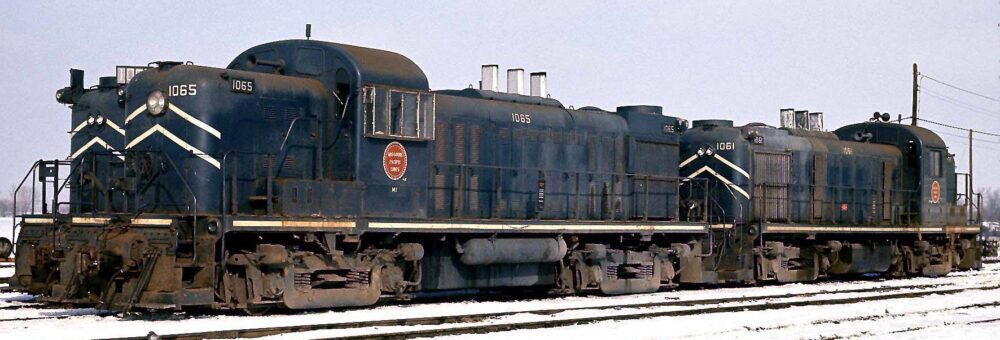
Prototype…
Ste. Genevieve—often shortened to “Ste. Gen” by locals—was founded in 1735 by French-Canadian settlers from Illinois, making it the oldest permanent European settlement in Missouri. Like many early frontier communities, residents lived in town and farmed communal land. After the Louisiana Purchase in 1804, the area drew German and Anglo-Saxon immigrants, spurring growth in commerce and trade. By the late 19th century, multiple quarries and lime kilns operated in and around the city, supporting the industrial expansion of regional centers such as St. Louis.
Between the 1930s and the 1950s, Ste. Genevieve’s population climbed from roughly 2,600 to about 4,000. Today, the city is home to approximately 5,000 residents. (Wikipedia)
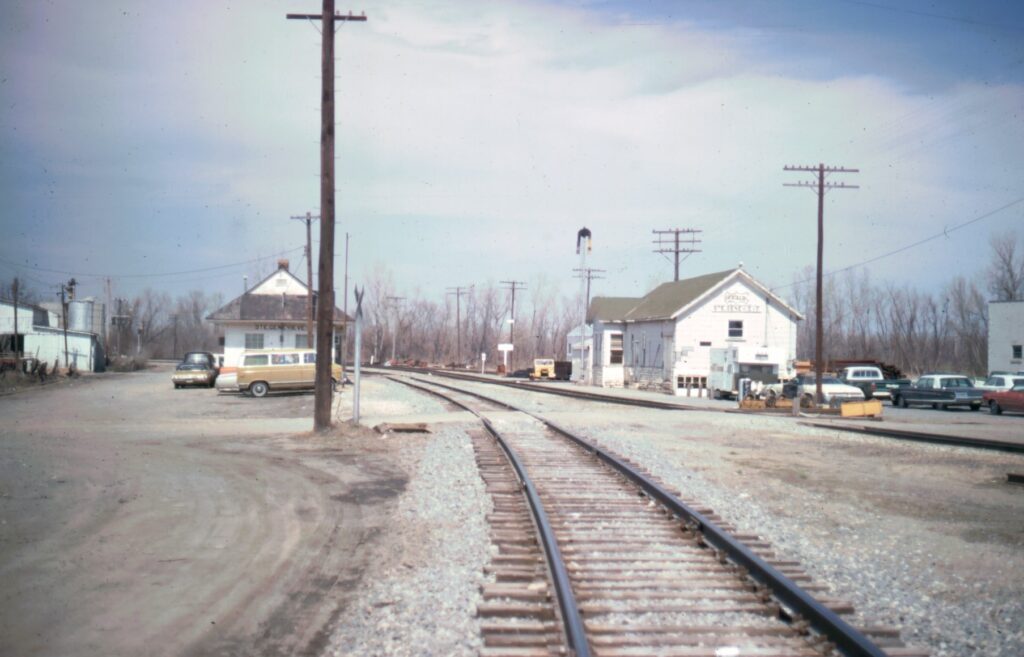
The M-I’s predecessor, the Illinois Southern, reached Ste. Gen first in 1902, with the Frisco arriving two years later. For many years, both railroads shared the Union Depot. In 1938, the Frisco constructed its own depot directly across the tracks.


Layout adaptation…
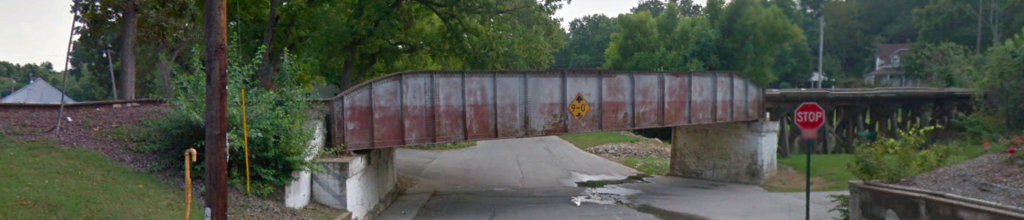
Trains depart southward from Middle Yard, cross Main Street on the bridge, and arrive at the Ste. Genevieve depot, where they occasionally board a passenger riding in the caboose.
Several industries beyond the depot are switched, including a busy International Shoe Company plant. A second industrial track hosts a mix of spots: a house dock, an electrical equipment supplier (Falk), and a fuel dealer (Donze Oil). Years ago, crews dubbed this the “Sofie Spur” after a local girl, Sophia, who—according to legend—enjoyed sunbathing on the dock in varying states of undress while crews worked the switching lead.

The Frisco interchange, located directly across from the M-I depot, is also handled here. The SLSF served the Western Lime Works plant, but all of its coal originated in Pinckneyville, Illinois, and moved via the MoPac and the M-I. As a result, this interchange handles a steady flow of hopper traffic.
Movement southward across the diamond is governed by semaphores under the control of the Tower Operator.

