Prototype…
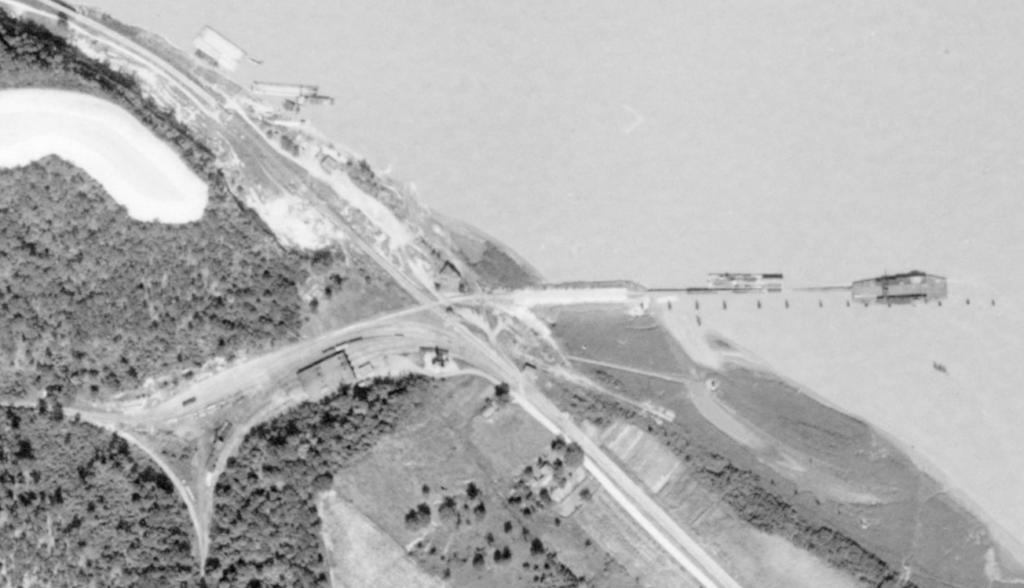
A bridge over the Mississippi was never built at Ste. Genevieve. As a result, when the Illinois Southern Railway sought to move traffic west to Bismarck, MO, its only option was the long detour through East St. Louis, across the river, and then through St. Louis proper. Congestion made this painfully slow, so the IS turned to a more direct solution: a railcar ferry between Kellogg, Illinois, and Little Rock Landing—so named for the prominent rock outcropping just north of Ste. Genevieve. In 1901 the IS drove the first spike leading down to the river incline.
Tucked into a narrow valley, the landing developed quickly. A wye turned engines, an engine house went up, coal and cinder facilities followed, and a small yard and water tower rounded out the operation. Traffic moved briskly toward Bismarck and the ferry service expanded, prompting ever-larger barges and boats.
Within a few years, the St. Louis–San Francisco (Frisco) ran its River Sub main line across the IS tracks. A grade-level interlocking tower protected the crossing, and because the IS had been there first, it held seniority.
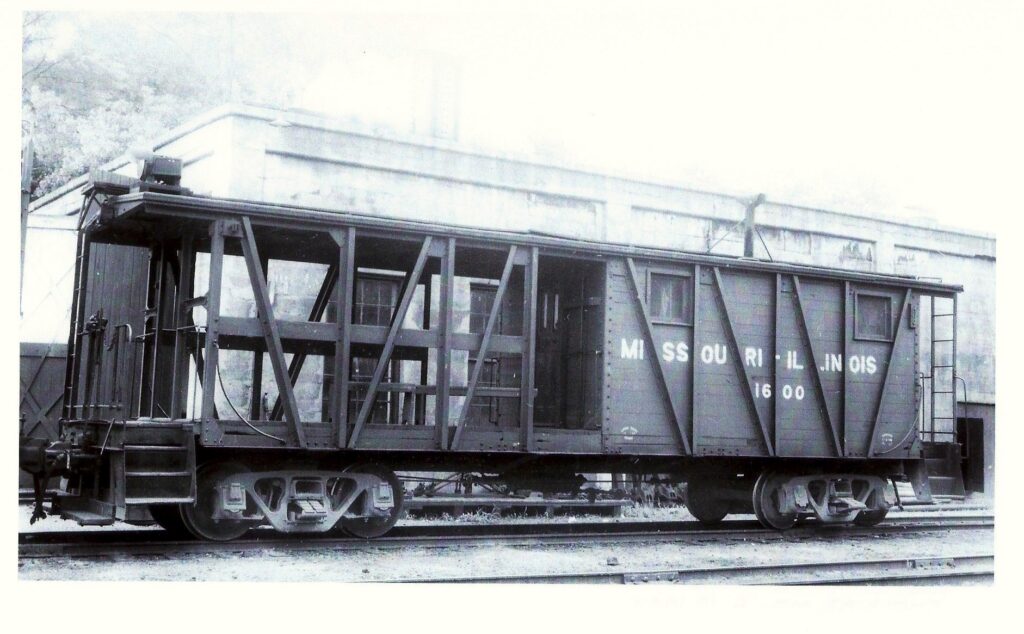
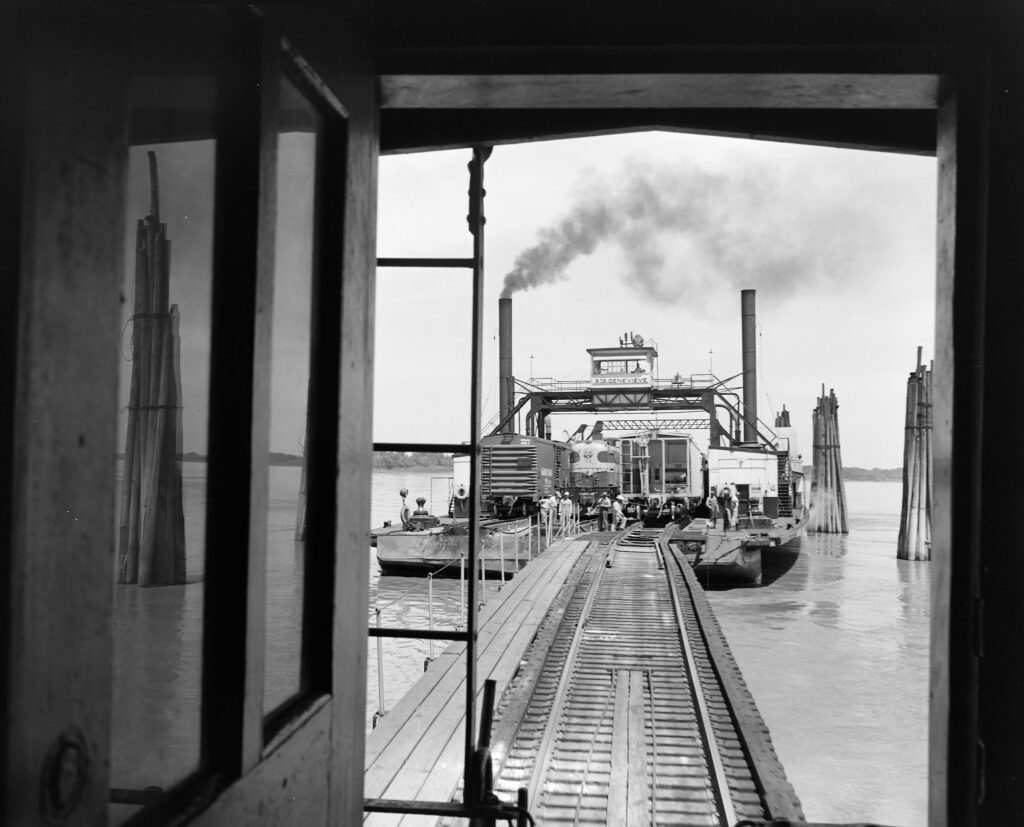
Disaster came in 1918 when a ferry loaded with cars sank in the river. That event sealed the IS Railway’s fate. When the Missouri–Illinois Railroad was subsequently formed using IS assets, a new vessel was ordered: a 286-foot steel-hulled side-wheeler named the SS Ste. Genevieve.
After Missouri Pacific took control of the M-I, Little Rock Landing was renamed to avoid confusion with Little Rock, Arkansas—an important point on the MoPac. The new name honored F. J. Thomure, an M-I executive from the MR&BT side. Even so, many longtime Ste. Genevieve residents still call the spot “Little Rock.”
In the early years, two crews worked in tandem to service the ferry at Thomure. Over time, the incline was simplified to a single track and handled by a single crew. Cars were always pulled from the center boat track first to reduce the risk of capsizing. That cut was moved to the yard, northbound cars were shoved onto the vacated track, and the “one cut off, one cut on” rhythm reduced how often the boat needed to be repositioned. Only when a full track was completely cycled, would the boat cast off from the apron and line up for the next track.
The pilot, Captain Harry “Gunnie” Grieshaber, was a seasoned Mississippi River man. The river’s heavy current made alignment tricky, and photos show the port engine working hard to keep the side-wheeler pinned against the apron during unloading.
After all 18 cars were removed, the SS Ste. Genevieve steamed back to Kellogg to repeat the sequence. While she crossed, the train crew took the inbound cut to Middle Yard and swapped it for another 18 cars bound for Illinois.
A typical day began at 7:00 a.m. The boat made five round trips daily, each Thomure–Kellogg cycle lasting roughly 90 minutes, including working all three onboard tracks. At peak, the operation transferred about 200 cars per day.
The Ste. Genevieve overnighted at Thomure. Crews worked six days a week, taking Sundays off. As the final cars were pulled from the boat on Saturday, two coal loads were placed on the outer tracks beside the boiler doors. A small Sunday crew came in to hand-shovel the coal into the bunkers.
Ferry service ended in 1961. By then, trains were being rerouted over Missouri Pacific lines south through Illinois, crossing the Mississippi below Cape Girardeau, and then running north to Ste. Genevieve on Frisco trackage.



Layout adaptation…
At O scale (1:48), the 286-foot SS Ste. Genevieve would measure nearly 72″ in length. Space constraints trimmed the model to a more manageable 52″ by 20″. While shorter than the prototype, the deck still carries three parallel tracks, each accommodating four 40-foot freight cars for a total of 12 cars per trip.

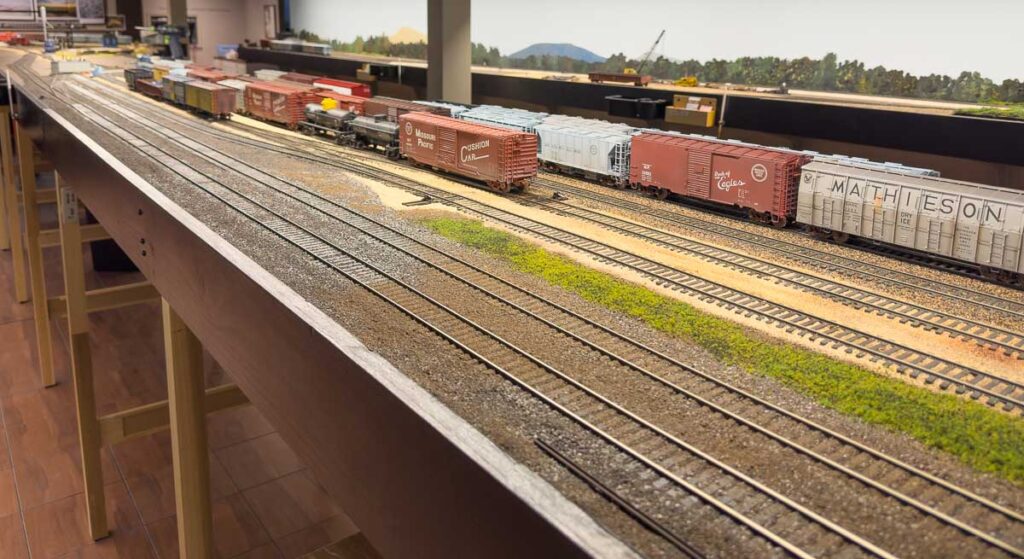
The Thomure yard serves the Incline Crew as both a switching area for assembling outbound cuts and a holding spot for cars pulled from the boat. Crews must ensure each cut falls within weight and length limits; although each track can hold up to four cars, actual capacity varies depending on whether the cars are loaded or empty.
When loading the boat, the crew must use an idler car to decrease wear and tear on the boat apron. The center track is worked first and a complete exchange of cars is performed before moving to the next track. For consistency, the front track is worked second and the rear track worked last.

As on the prototype, the incline track crosses the main line at the top of the hill. In this case, modeler’s license is employed and rather than crossing the Frisco, the incline crosses the M-I main. An interlocking plant and tower protect the diamond, and trains may not proceed until the Tower Operator clears the semaphore.
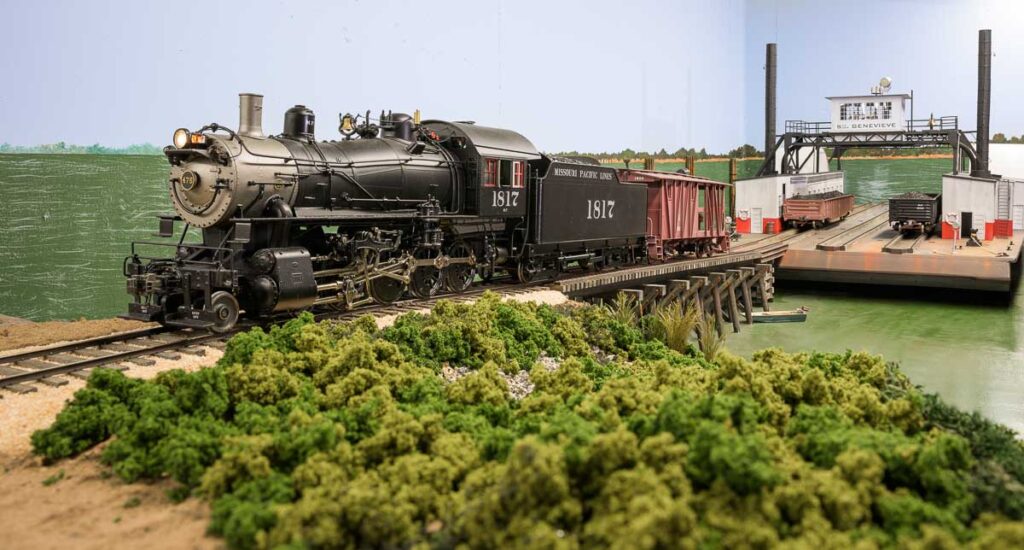
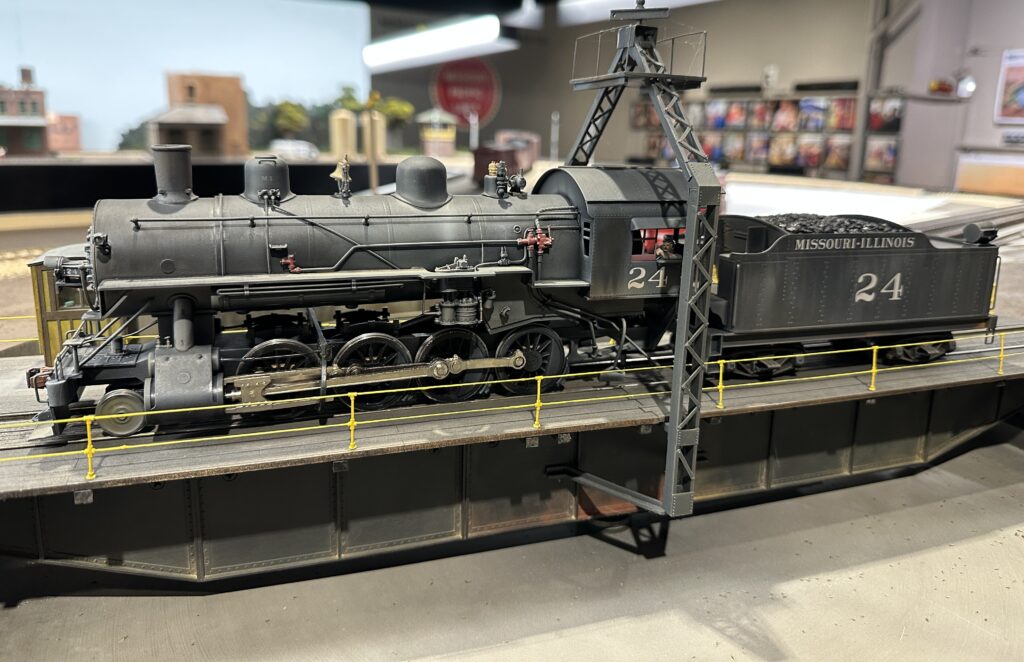
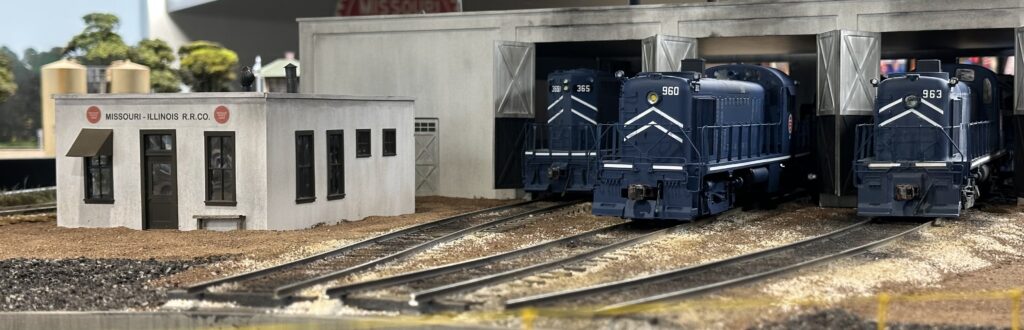
Engine service and storage are located at Thomure. A three-stall engine house is fed by a 24″ Millhouse River Studio turntable, supplemented by three garden tracks used for storage and access to the coal shed. All structures are scratchbuilt and follow the prototype closely, based on period photographs. Diesel fuel, sand, coal, and water are available along the service lead.
The turntable is operated by the superintendent or clerk and features auto-indexing. Each engine-house stall is controlled by its own power toggle located above the super’s desk.