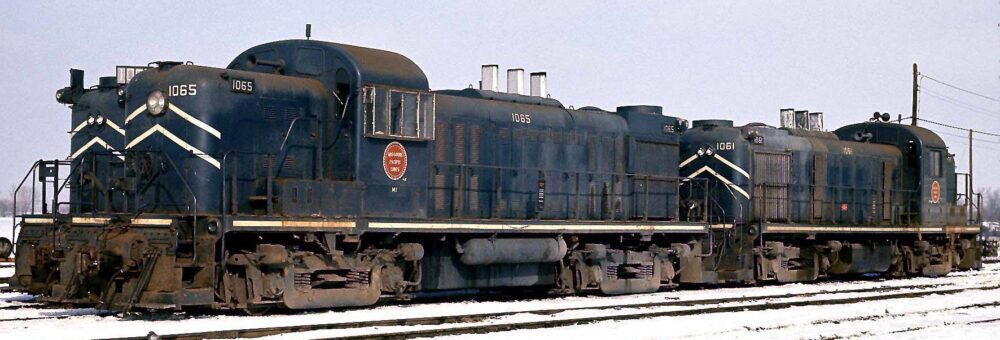
I grew up in a small town south of St. Louis served by the Missouri-Illinois Railroad (M-I), a subsidiary of the Missouri Pacific. That little short line left a big impression. In 2015, I finally leaned into the nostalgia and began modeling the M-I, building a Proto48 (O scale 1:48) layout inspired by the Festus and Crystal City area. By 2018 the layout was about ninety percent complete—right as we decided to move to our forever home. Most of the original layout had to go, but I salvaged the critical pieces: switches, structures, and anything with future potential.
In the new house, a clean, untouched basement became a train room with space to grow—ample room for a workshop, a crew area, and the all-important refreshments.
My goal is simple: create a miniature railroad community where friends and guests operate the trains and bring the whole thing to life. That’s where the phrase “a large, multi-year, horizontal, kinetic performance art installation” comes in.
So what does that actually mean? The installation is large—comprising nearly 900 square feet—and construction began in 2019. It’s horizontal by design; trains behave better that way. And it’s kinetic because movement is the point: trains moving freight and crews following prototype-based rules that mirror real railroad operations. Each operating session is a performance, whether one person participates or a whole team.
People unfamiliar with the hobby often expect to see trains racing around curves, maybe even a spectacular crash or two à la The Addams Family. The reality is the complete opposite. Operators work in pairs as engineer and conductor, building a train according to a detailed work order. Once built, the train travels a route, stopping to pick up, set out, or rearrange cars exactly as instructed. After tying up at the end of the line, the crew rolls up their sleeves and starts another job. All movements follow formal rules and verbal authority. A full session runs two to three hours.
This website gives visitors and new operators the context they need—an overview of the prototype’s history, and an introduction to the rules and practices that bring the layout to life.
On the right, you’ll find a curated list of vendors, suppliers, and blogs for anyone interested in Proto48 modeling. Dive into the top menu to explore the layout and learn more about the Missouri-Illinois Railroad.